Raccoon in Arkansas
Raccoons can turn a damaged roof vent or chimney into a sheltered den. Around Arkansas homes, accessible trash and pet food often bring them close before attic noises reveal an entry problem.
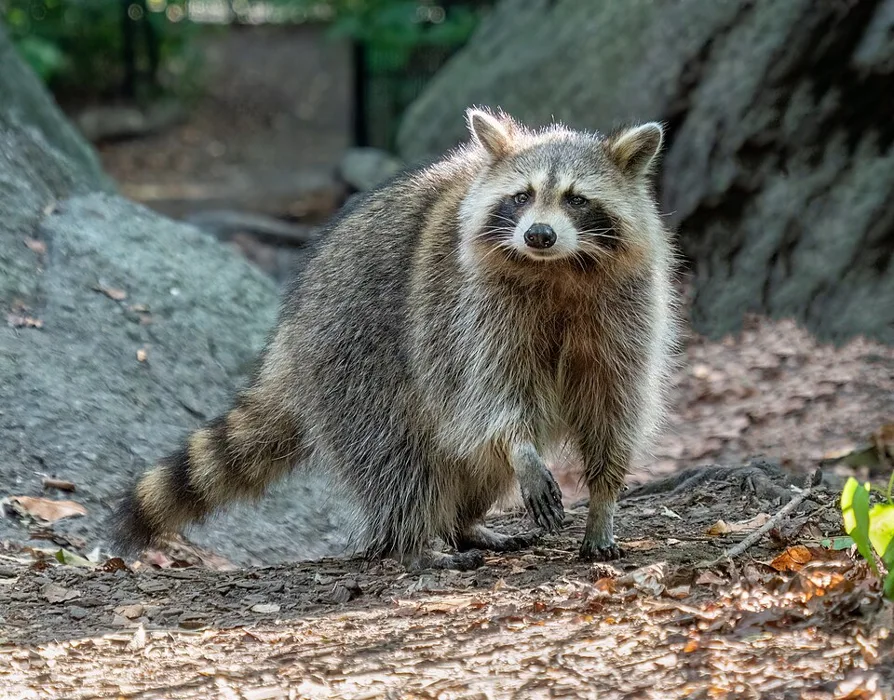
Rhododendrites — CC BY-SA 4.0. Resized and converted to WebP.
Quick identification
- scientificName
- Procyon lotor
- size
- Body about 16–28 inches, plus a ringed tail
- color
- Gray-brown fur, black facial mask, ringed tail
- activity
- Mostly nocturnal; daytime sightings alone do not prove illness
- primaryConcern
- Denning damage, contaminated areas, and possible bite or disease exposure
How to identify this pest
Look for the black facial mask, ringed tail, and hand-like front paws. Raccoons are heavier than squirrels and may make thumping or dragging sounds overhead. Noise alone cannot identify an animal: a roof inspection or safely observed entry route gives better evidence than guessing from sound. Never approach a cornered raccoon to get a photograph.
Why they are in Arkansas homes
Wooded neighborhoods, creeks, and yards with mature trees provide cover throughout Central Arkansas. Open garbage, outdoor pet food, and damaged soffits can connect a dependable food supply to shelter. Females may choose attics or chimneys as nursery sites, so an apparent single-animal problem can include dependent young. Rain-damaged building materials can create openings that a strong animal enlarges.
Are they dangerous?
Raccoons can bite when cornered and can carry rabies. Their feces may contain raccoon roundworm eggs; keep children and pets away from suspected latrines and do not sweep, vacuum, or disturb them. Seek qualified cleanup guidance rather than treating wildlife waste like ordinary dirt. Contact a medical professional or public health authority after a bite, scratch, or possible saliva exposure. A raccoon seen during daylight is not automatically rabid.
Why they keep coming back
Removing one animal does not remove an accessible den or food supply. A mother may keep trying to reach young left behind. Unrepaired vents and unsecured trash continue to attract animals, making coordinated removal and exclusion more useful than repeatedly chasing them away.
Professional treatment
Hicks Home Defense Pest Control can help you discuss signs of activity and the appropriate next step. Depending on the species, access, and scope, that may involve inspection, entry-point identification, exclusion recommendations, or referral to a wildlife specialist. This guide does not promise direct trapping, relocation, structural repairs, or contaminated-insulation cleanup. Any exclusion plan should account for dependent young and current Arkansas and local wildlife rules.
Where you may find them
- attic
- garage
- yard
- chimney
- soffits
Signs of an infestation
- Heavy movement overhead, especially after dark
- Damaged soffits, roof vents, or chimney access
- Tracks near repeated access points
- Disturbed insulation or a repeated feces deposit
- Food containers or unsecured garbage disturbed overnight
What you can do yourself
- Secure garbage lids and bring pet food indoors at night.
- Keep people and pets away from an occupied den.
- Document the entry point from the ground without climbing onto the roof.
- Have overhanging branches and damaged roof components assessed safely.
- Do not seal the opening, light a fireplace, or attempt relocation while animals or young may remain inside.
Seasonal activity
fall
Moderate: Animals continue exploring food and shelter.
spring
High: Nursery denning can bring females into sheltered structures.
summer
Moderate: Young animals travel with adults and food sources remain attractive.
winter
Sheltered activity possible: Protected dens may remain occupied during cold spells.
Common questions
Does a raccoon in the yard need removal?
Not usually just for passing through. Focus on removing food attractants; denning inside a building or unsafe close contact warrants assessment.
Can I close the attic hole tonight?
Not until all animals, including dependent young, are confirmed out. Premature sealing can trap animals or cause further damage.
Does seeing one in daylight mean rabies?
No. Daytime activity can occur for several reasons. Keep your distance and report abnormal behavior to the appropriate local authority.
Can I clean raccoon droppings myself?
Suspected latrines require special precautions because of roundworm risk. Keep the area undisturbed and seek public-health or qualified cleanup guidance.
Should I trap and relocate it?
Do not assume relocation is appropriate or unrestricted. Consult current Arkansas wildlife guidance and local rules, and have dependent young assessed first.
Does Hicks Home Defense remove raccoons?
Contact us to discuss the situation. Inspection, exclusion recommendations, or referral may be appropriate; this page does not promise direct capture, relocation, or cleanup.
Sources

Last updated 2026-10-07