Black Widow in Arkansas
Black widows favor sheltered outdoor corners more than busy living spaces. Around Arkansas homes, a web near stored equipment, a crawlspace opening, or a quiet garage corner deserves a careful look without reaching into it.
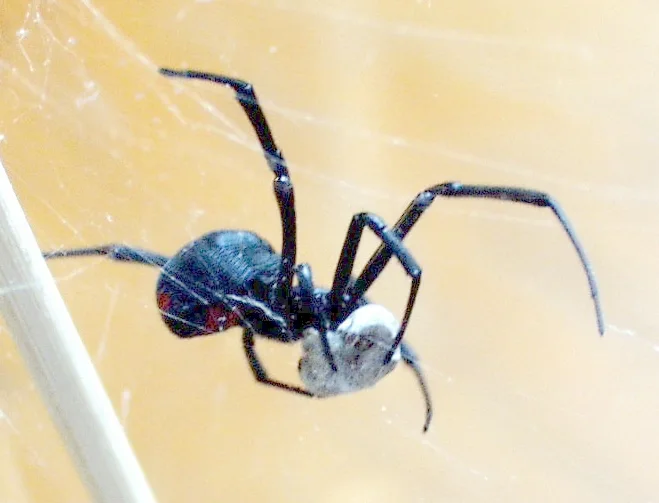
Patrick Edwin Moran — CC BY 2.0. Resized and converted to WebP.
Quick identification
- scientificName
- Latrodectus mactans
- size
- Adult female body about ½ inch, excluding legs; males smaller
- color
- Adult females typically glossy black with red underside markings
- activity
- Often stays near a sheltered irregular web
- primaryConcern
- Medically significant venom; avoid disturbing webs
How to identify this pest
The familiar adult female has a rounded dark abdomen and usually a red hourglass on its underside. Juveniles and males may have additional pale or red markings, and not every widow looks identical. Their strong irregular webs are different from the symmetrical circular webs of orb weavers. Do not turn a live spider over to inspect its underside. A clear photograph taken from a safe distance is preferable.
Why they are in Arkansas homes
Protected spaces around foundations, outdoor furniture, sheds, woodpiles, and crawlspaces provide web sites and insect prey. Landscaping and stored materials can make these areas harder to inspect. Warm-season outdoor activity can increase encounters, but protected sites may remain occupied outside summer. Finding a spider outdoors does not mean living rooms are infested.
Are they dangerous?
Black widow venom can cause significant symptoms. Bites usually occur when a spider is pressed against skin or disturbed, not because it pursues people. Keep hands away from suspected webs and seek medical advice promptly after a suspected bite. Severe symptoms require urgent care. Do not use this page to diagnose or treat a bite.
Why they keep coming back
Undisturbed web sites and a supply of insect prey can support new spiders even after a web is removed. Clutter against structures and rarely moved yard items maintain shelter. Preventing recurrence means changing access and shelter as well as addressing confirmed activity.
Professional treatment
An inspection helps distinguish black widows from harmless cobweb spiders and locate sheltered activity. Hicks Home Defense Pest Control can discuss accessible web removal, targeted treatment where appropriate, prey reduction, and exclusion recommendations. Treatment scope depends on access and confirmed activity; do not disturb a suspected widow while waiting for service.
Where you may find them
- garage
- crawlspace
- yard
Signs of an infestation
- Irregular webs in sheltered low-traffic areas
- A confirmed widow occupying a web near stored items
- Smooth pale egg sacs associated with a suspected widow web
- Repeated sightings around the same protected exterior shelter
What you can do yourself
- Wear gloves when moving stored outdoor materials and inspect before reaching.
- Reduce clutter along exterior walls and keep firewood away from the house.
- Seal accessible gaps and maintain screens.
- Keep children and pets away from suspected widow webs and request identification.
Seasonal activity
fall
Moderate: Occupied webs can persist in protected areas.
spring
Moderate: Activity increases with warmer weather and available prey.
summer
High: Outdoor encounters are more likely around sheltered sites.
winter
Low: Activity slows outdoors; sheltered sites can remain occupied.
Common questions
Do all black widows have a red hourglass?
Adult female southern black widows typically do, but markings and life stages vary. Avoid using one feature as the only identification test.
Are they aggressive?
They generally stay near their webs and avoid disturbance. Contact is most likely when a hand or body presses against a hidden spider.
Where should I check around my home?
Inspect visually around sheltered equipment, woodpiles, crawlspace openings, and quiet garage corners. Do not reach into spaces you cannot see.
Is every messy web a widow web?
No. Many harmless house spiders also build irregular webs. Confirm the spider before deciding on control.
Should I spray a suspected spider myself?
Do not approach or disturb it if that increases contact risk. Restrict access and ask for identification and appropriate treatment guidance.
Sources
- University of Kentucky: Eliminating Spiders Around Homes and Buildings
- Photograph: Latrodectus mactans eating.JPG
- Photograph license: CC BY 2.0

Last updated 2026-10-07