House Mouse in Arkansas
Mouse droppings in a pantry or repeated scratching behind cabinets need a source-and-entry investigation, not just a trap beside the last sighting. House mice can live entirely inside an Arkansas home when food and shelter are available.
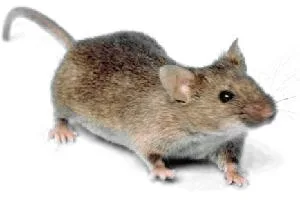
Unknown authorUnknown author (original) / Ilmari Karonen (editing) — Public domain. Resized and converted to WebP.
Quick identification
- scientificName
- Mus musculus
- size
- Body about 2½–4 inches, plus a similar-length tail
- color
- Gray-brown above, lighter beneath
- activity
- Mostly nocturnal; indoor breeding possible year-round
- primaryConcern
- Food contamination, gnawing, and unsafe droppings cleanup
How to identify this pest
House mice have relatively large ears, small eyes, a pointed face, and a nearly hairless tail. Adults are much smaller than rats, but a young rat can cause confusion: compare the head and feet rather than size alone. “Field mouse” is an imprecise nickname and may refer to other rodents. Droppings are useful evidence but should not be handled or used as the sole species test.
Why they are in Arkansas homes
Fall cold snaps can encourage movement toward buildings, while established indoor mice can remain active through every season. Garages, appliance gaps, poorly sealed utility penetrations, attached storage, and accessible pet food create opportunities. Openings roughly the width of a pencil can be enough for a mouse; irregular construction gaps should be assessed carefully rather than judged only from the room side.
Are they dangerous?
Rodents can contaminate food and surfaces, and gnawing can damage materials. Disease risk varies by species and exposure; a mouse sighting does not diagnose an illness. Do not sweep or vacuum dry droppings. Follow current CDC wet-cleaning guidance, ventilate where recommended, and use suitable protection. Heavy contamination or difficult spaces may require professional cleanup.
Why they keep coming back
Trapping without sealing entry points can remove individual mice while leaving access open. Food storage, pet bowls, clutter, and gaps between connected spaces can sustain hidden activity. Mice reproduce indoors when conditions allow, so a reduction in noises is not proof that all activity has stopped.
Professional treatment
Hicks Home Defense Pest Control offers a $99 rodent inspection to assess activity, likely species, and accessible entry points. Rodent treatment is priced separately from general pest membership. Recommendations may include monitoring, a targeted control plan, entry-point identification, and exclusion work or referral as appropriate. The inspection determines scope rather than promising every opening can be permanently closed during the visit.
Where you may find them
- kitchen
- pantry
- attic
- garage
Signs of an infestation
- Small rod-shaped droppings near stored food or protected routes
- Gnawed packaging and scattered food
- Shredded nesting material inside quiet storage
- Scratching sounds, especially when the house is quiet
- Fresh captures or new activity after old evidence is safely removed
What you can do yourself
- Seal food and pet food in durable closed containers.
- Reduce accessible nesting clutter and inspect stored items.
- Document droppings or damage without disturbing dry contamination.
- Use appropriately placed traps only where children and pets cannot contact them.
- Coordinate exclusion with control; do not casually seal an active animal into an inaccessible void.
Seasonal activity
fall
High: Cooling weather can increase building-entry pressure.
spring
Moderate: Indoor populations can continue; outdoor food and shelter change.
summer
Moderate: Food, shelter, and reproduction can support activity.
winter
Indoor activity possible: Heated structures can support feeding and nesting.
Common questions
What do mouse droppings look like?
They are small dark rod-shaped pellets, but other pests leave similar evidence. Photograph from a safe distance and avoid touching or disturbing them.
Can a mouse fit through a pencil-sized gap?
A small mouse can pass through an opening around ¼ inch across. Flexible or irregular edges and hidden gaps make a full inspection more useful than checking one hole.
Why do I still hear noises after setting a trap?
There may be more than one animal, another entry route, or a different pest. Noises alone cannot identify the species or population.
Should I vacuum up the droppings?
No. CDC advises against sweeping or vacuuming dry droppings because contaminated particles can become airborne. Follow wet-cleaning guidance.
Do mice leave in summer?
Not necessarily. A population with food, water from food sources, and indoor shelter can remain year-round.
Does the $99 inspection include treatment?
The inspection assesses activity and entry concerns. Treatment and any exclusion work require a separate scope and price.
Sources
- Arkansas Cooperative Extension: Household Pest Control
- CDC: How to Clean Up After Rodents
- Photograph: Mouse white background.jpg
- Photograph: Brown Rat (Rattus norvegicus).jpg
- Photograph license: CC BY-SA 4.0


Last updated 2026-10-07