Roof Rat (Attic Rat) in Arkansas
“Attic rat” often means a roof rat, a slender climbing rodent that can nest above the ceiling. Arkansas attic noises can also come from mice, squirrels, or other wildlife, so identification should come before treatment.
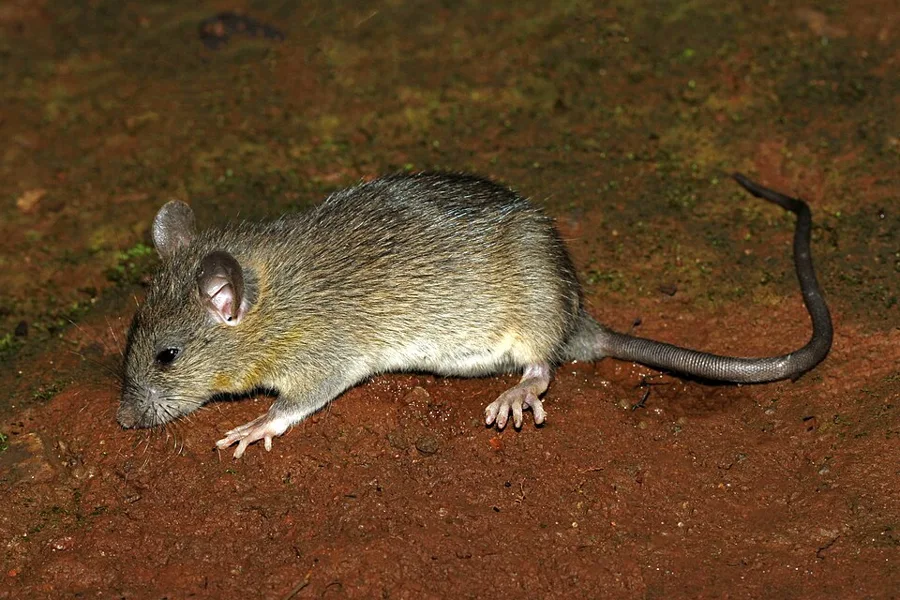
Davidvraju — CC0. Resized and converted to WebP.
Quick identification
- scientificName
- Rattus rattus
- size
- Body about 6–8 inches; tail longer than head and body combined
- color
- Brown to black above, lighter underneath
- activity
- Mostly nocturnal; agile climber
- primaryConcern
- Gnawing damage, food contamination, and unsafe waste cleanup
How to identify this pest
Roof rats have a pointed muzzle, prominent ears, a slender body, and a long scaly tail that exceeds head-and-body length. Norway rats are generally heavier, blunt-faced, and shorter-tailed. A young rat can resemble a mouse, so compare proportions and other signs. An attic location by itself does not prove the species: Norway rats can climb too.
Why they are in Arkansas homes
Arkansas Extension identifies roof rats among the commensal rodents associated with homes. Mature trees, dense climbing vegetation, roof gaps, and nearby food can support access around Central Arkansas properties. Attic warmth provides shelter, but activity is not limited to cold weather. Pet feed, birdseed, fruit, and unsecured waste can sustain a population even when the nesting site is high above the ground.
Are they dangerous?
Rats can contaminate food and damage wiring and insulation. The presence of a rat does not diagnose a particular disease or prove an electrical hazard, but damaged wiring should be assessed professionally. Do not sweep or vacuum dry rodent droppings. Follow CDC wet-cleaning guidance, and seek qualified help for extensive attic contamination or unsafe access.
Why they keep coming back
Trapping individual rats without closing the access routes leaves the attic available to others. Roof-level gaps are easy to overlook during a ground-only inspection. Roof rats can be cautious around unfamiliar objects, so an untouched trap after one night does not prove the space is empty. Food control, monitoring, and durable exclusion need to work together.
Professional treatment
Contact Hicks Home Defense Pest Control for inspection and a treatment scope based on the findings. Control, monitoring, and exclusion recommendations depend on the property; wildlife trapping and structural repairs are not automatically included.
Where you may find them
- attic
- garage
- yard
- kitchen
Signs of an infestation
- Nighttime scratching along rafters or ceiling spaces
- Droppings along protected elevated routes
- Gnawed food containers or building materials
- Dark rub marks near frequently used openings
- A slender rat moving along a fence or other elevated route
What you can do yourself
- Store pet food and birdseed in durable closed containers.
- Remove fallen fruit and secure outdoor waste.
- Arrange safe pruning and roof repairs; keep away from utility lines.
- Avoid loose poison that can expose children, pets, or other wildlife.
- Coordinate control and exclusion instead of sealing an occupied attic blindly.
Seasonal activity
fall
High: Cooling nights can increase interest in sheltered structures.
spring
Moderate: Feeding and nesting can continue in protected sites.
summer
Moderate: Food and cover support activity despite warm weather.
winter
Indoor activity possible: Occupied attics can support ongoing nesting.
Common questions
Are attic rats a separate species?
No. It is a common description, often used for roof rats. Other rodents and wildlife can also occupy attics.
How do roof rats reach the roof?
They are strong climbers and may use vegetation, fences, and other connected routes. Have suspected access near utility lines assessed safely.
Can I identify them by scratching noises?
No. Timing and location help an inspection, but physical evidence is needed to distinguish rats, mice, and squirrels.
Will they leave when it gets warm?
Not necessarily. Shelter and dependable food can support activity in any season.
Can I vacuum attic droppings?
No. Do not disturb dry waste. Follow CDC cleanup guidance and seek help where contamination or access makes cleanup unsafe.
What does rodent service include?
Contact Hicks Home Defense Pest Control for inspection and a treatment scope based on the findings. Control, monitoring, and exclusion recommendations depend on the property; wildlife trapping and structural repairs are not automatically included.
Sources
- Arkansas Extension: Controlling Mice and Rats
- UC IPM: Rat identification and management
- CDC: Rodent cleanup
- Photograph and attribution
- Photograph license

Last updated 2026-10-07