German Cockroach in Arkansas
Tiny roaches around an Arkansas kitchen are not the same problem as a large outdoor roach wandering through a door. German cockroaches live and reproduce indoors, often close to appliances, food, and water. Correct identification changes the treatment plan.
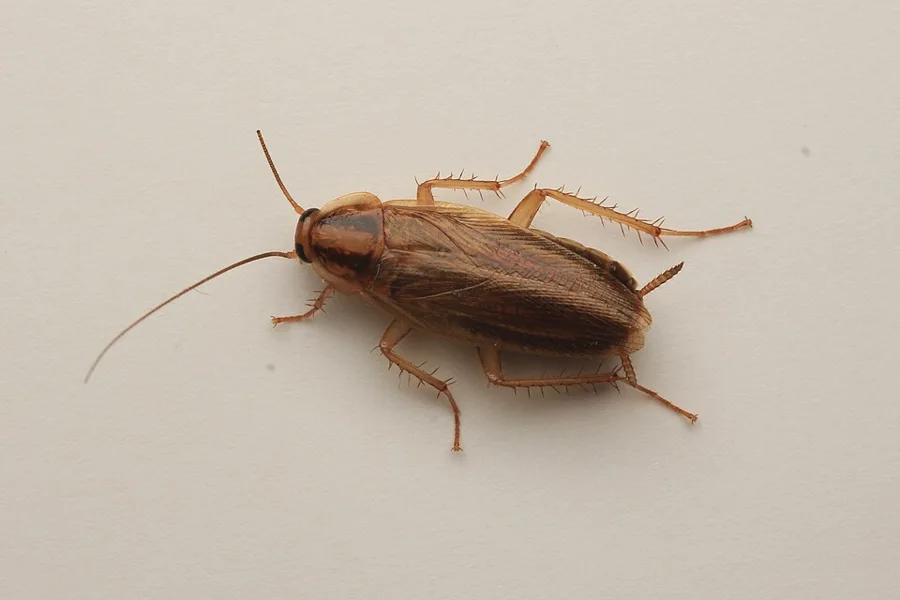
Bagous — CC BY-SA 4.0. Resized and converted to WebP.
Quick identification
- scientificName
- Blattella germanica
- size
- Adults about ½–⅝ inch; young nymphs are smaller
- color
- Tan to light brown adults; darker nymphs
- activity
- Mostly nocturnal; indoor activity year-round
- primaryConcern
- Food contamination and cockroach allergens
How to identify this pest
Look for two dark parallel stripes on the shield just behind an adult’s head. Young roaches are darker, lack developed wings, and may show a pale stripe down the back. Adults have wings but rarely fly. A tan roach alone is not enough to confirm the species: small brown-banded cockroaches have different markings and can occupy drier parts of a house. Photograph a specimen from above without handling it, and include an object for scale when safe.
Why they are in Arkansas homes
Arkansas heat and humidity can support insect activity, but German cockroaches do not need a hot Arkansas summer to survive in a heated kitchen. They commonly arrive in belongings, used appliances, cartons, or deliveries, and can move between connected units. Warm refrigerator motors, leaking plumbing, and food residue provide dependable resources. Finding them does not mean a home is uncared for: even a clean home can receive an introduced roach. Sanitation helps treatment work but does not replace finding their hiding places.
Are they dangerous?
German cockroaches can contaminate food-contact areas. Their droppings and body fragments can contribute to allergy and asthma problems in susceptible people. Their presence is not evidence that a particular illness came from roaches. Protect food and seek medical advice for health symptoms rather than relying on a pest identification page.
Why they keep coming back
One female’s egg case can contain dozens of developing young, and she carries it until near hatching. Hidden survivors and newly hatched nymphs can remain after visible adults decline. Roaches may also be reintroduced in items or move from adjoining units. The goal is not simply to knock down the roaches you can see: successful control requires breaking the breeding cycle, monitoring progress, and removing the food, moisture, and shelter that sustain the infestation.
Professional treatment
American cockroaches and many other outdoor species can often be addressed within general pest control. German cockroaches require a different, targeted approach. Hicks Home Defense Pest Control offers an initial German Cockroach Cleanout for $149.99 plus tax, including the German cockroach cleanout and an exterior perimeter treatment for general household pests. The technician evaluates infestation severity and hiding areas, then selects appropriate targeted treatment, baiting, and monitoring measures. Additional follow-up treatments may be recommended and are not automatically included in the initial price. Reducing visible activity is not proof that an infestation is gone, and one-visit eradication is not promised.
Where you may find them
- kitchen
- bathroom
Signs of an infestation
- Small roaches scattering when lights come on at night
- Pepper-like droppings along cabinet seams or near appliance motors
- Tan egg cases or females carrying an egg case
- Shed skins and nymphs in narrow protected cracks
- Repeated activity on monitoring traps beside sinks and appliances
What you can do yourself
- Store food and pet food in sealed containers; remove crumbs and grease from reachable areas.
- Repair drips and empty standing water where practical. Do not dismantle powered appliances.
- Reduce cardboard clutter and inspect secondhand appliances before bringing them inside.
- Use monitoring traps out of children’s and pets’ reach to document locations and trends.
- Avoid total-release foggers. Do not spray over baits or combine treatments without label guidance.
Seasonal activity
fall
Indoor activity possible: Infestations remain indoors rather than disappearing with cooler weather.
spring
Indoor activity possible: Indoor activity possible; introductions can occur any month.
summer
Indoor activity possible: Warm interior hiding places can support rapid development.
winter
Indoor activity possible: Heated kitchens can support continued breeding.
Common questions
How do German cockroaches get inside?
They are often carried in appliances, boxes, or other belongings. In connected housing, they can also travel through shared gaps and utility routes.
Does seeing one mean I have an infestation?
One confirmed German cockroach warrants an inspection, but a single sighting cannot establish how many are present. Check nearby hiding places and monitor before assuming the extent.
Are tiny roaches baby American cockroaches?
They might be, but size alone cannot answer that. Adult German cockroaches are also small. The markings, body shape, and location help distinguish them.
Why did roaches return after I sprayed?
Spraying exposed insects can leave hidden survivors and developing eggs. Reinvasion is also possible. Monitoring helps separate remaining activity from a new introduction.
How quickly do German cockroaches reproduce?
A female can produce multiple egg cases, each holding dozens of young. Development varies with temperature and resources, so indoor populations can build rapidly without a fixed timetable for every home.
Are follow-up treatments included in the $149.99 price?
Not automatically. The initial cleanout includes exterior general-pest perimeter treatment, plus tax. The technician assesses severity and explains whether additional follow-up treatments are recommended and how they are priced.
Should I throw away my refrigerator?
Do not discard appliances solely because roaches were seen nearby. Have the hiding areas assessed first; replacing an appliance without addressing the infestation may not solve the problem.
Sources
- University of Kentucky: Cockroach Elimination in Homes and Apartments
- Photograph: Blatella germanica 2.jpg
- Photograph license: CC BY-SA 4.0

Last updated 2026-10-07