Brown Recluse in Arkansas
Brown recluse spiders occur in Arkansas, but many harmless spiders are mistaken for them. Identification needs more than a brown body or a violin-like mark. Storage habits, monitoring, and a careful inspection matter more than treating every visible spider as dangerous.
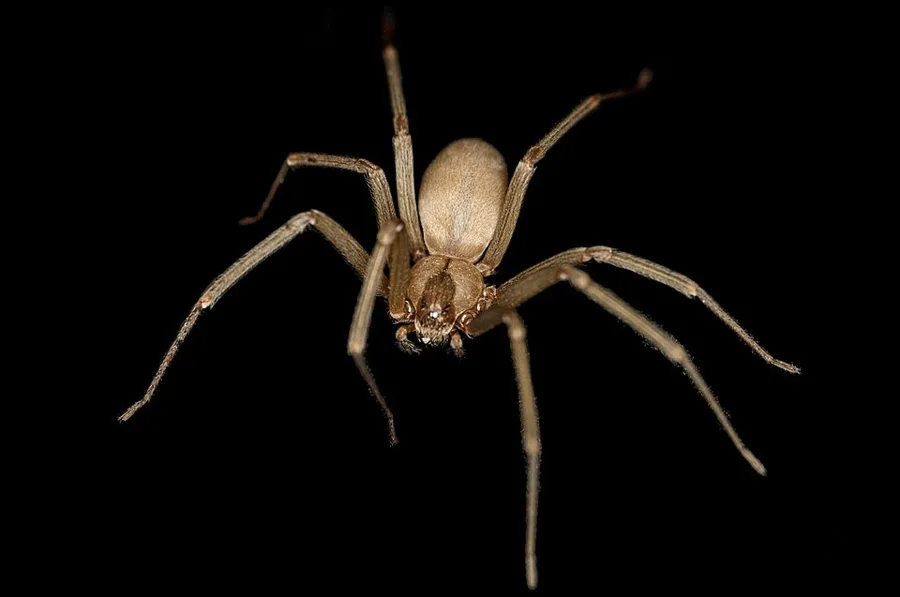
Rosa Pineda — CC BY-SA 3.0. Resized and converted to WebP.
Quick identification
- scientificName
- Loxosceles reclusa
- size
- Body about ¼–½ inch, excluding legs
- color
- Usually tan to brown; color varies
- activity
- Mostly nocturnal; shelters in undisturbed places
- primaryConcern
- Medically significant venom; avoid handling
How to identify this pest
Brown recluses generally have plain, unbanded legs and a fairly uniform abdomen. A darker violin-shaped mark may be visible behind the eyes, but other spiders can have similar-looking markings. Specialists use additional features, including six eyes arranged in three pairs; do not get close enough to a live spider to inspect its eyes. Use a clear photograph or a safely contained specimen. Wolf spiders are usually hairier and often have more obvious body patterns.
Why they are in Arkansas homes
Arkansas lies within the brown recluse’s established range. Inside homes, undisturbed cardboard, stored clothing, closets, attics, and garages provide hiding places. Outdoor shelter may include loose materials, woodpiles, and protected gaps. Indoor activity is not limited to dirty homes. A garage full of rarely moved boxes provides cover even when the rest of the house is clean.
Are they dangerous?
Brown recluse venom can cause medically important injuries, but a skin lesion alone does not identify a spider bite. They generally avoid people and may bite when trapped against skin. Do not handle a suspected recluse. If a bite is suspected, seek medical advice; severe or rapidly worsening symptoms need urgent care. Do not diagnose a wound from an online pest guide.
Why they keep coming back
Hidden spiders, protected egg sacs, insect prey, and many connected storage spaces make an established population difficult to assess from visible activity alone. Moving boxes can reveal spiders without indicating a sudden new invasion. Monitoring over time is more informative than a single treatment or sighting.
Professional treatment
Hicks Home Defense Pest Control can assess identification, hiding places, and activity patterns before recommending a treatment scope. Inspection, monitoring, reducing harborage, and targeted treatment may all be appropriate. An established brown recluse problem may need a tailored plan and follow-up rather than assuming routine perimeter service is sufficient. No treatment timeline or elimination guarantee is implied by this guide.
Where you may find them
- garage
- attic
- bedroom
Signs of an infestation
- Repeated confirmed sightings rather than an isolated unidentified brown spider
- Spiders on monitoring traps along protected room edges
- Shed skins or spiders in seldom-disturbed storage
- Activity when long-stored boxes, shoes, or clothing are moved
What you can do yourself
- Store shoes and clothing in closed containers and shake out long-stored items carefully.
- Reduce cardboard clutter and separate stored items from walls where practical.
- Use gloves when moving firewood or stored materials.
- Seal accessible gaps and reduce other insects that provide prey.
- Place monitoring traps where children and pets cannot reach them; ask for help interpreting catches.
Seasonal activity
fall
Moderate: Spiders can remain in protected storage and indoor shelter.
spring
Moderate: Warmer conditions may increase movement.
summer
High: Wandering and indoor sightings may increase.
winter
Indoor activity possible: Heated buildings can support continued activity; outdoor movement is reduced.
Common questions
Are brown recluse spiders native to Arkansas?
Arkansas is within their established range. That makes identification worthwhile, but it does not make every brown spider a recluse.
Is the violin mark enough to identify one?
No. Markings vary and other spiders can look similar. Leg pattern, body features, and specialist examination help confirm identification.
Can I identify a bite from a photo?
A wound photograph cannot reliably establish a spider species or even confirm a bite. A clinician should assess concerning symptoms.
Why do I see them when cleaning the garage?
Stored boxes and little-disturbed spaces provide shelter. Moving those items can expose spiders that were already present.
Will removing webs solve the problem?
No. Brown recluses do not rely on obvious prey-catching webs like orb weavers. Focus on safe storage, inspection, monitoring, and reducing hiding places.
Do I need a special treatment?
That depends on confirmed identification and the extent of activity. Ask for an assessment rather than assuming a general service covers an established recluse population.
Sources
- University of Kentucky: Brown Recluse Spider
- University of Kentucky: Eliminating Spiders Around Homes and Buildings
- Photograph: Brown Recluse.jpg
- Photograph license: CC BY-SA 3.0

Last updated 2026-10-07